You're at the beach trying to read a menu, or on a ski slope attempting to check a trail map, and your regular reading glasses fail you completely because the glare is overwhelming. Dark tint readers for men are fixed-shade reading glasses with Category 3 lenses that block intense visible light while maintaining your exact prescription strength, making them essential for reading in extreme brightness where regular sunglasses blur text and clear readers cause eye strain. Unlike photochromic lenses that need time to darken or standard sunglasses that sacrifice reading clarity, these glasses provide instant, precise near-vision correction paired with maximum sun protection.
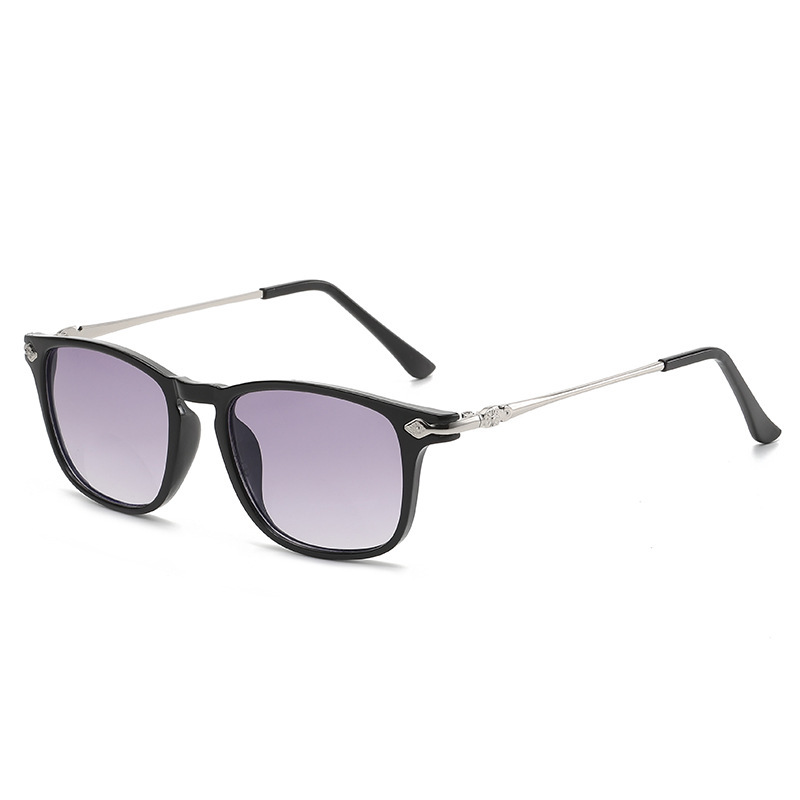
MEN'S OUTDOOR SQUARE SUNSHADE BIFOCAL PRESBYOPIC SUNGLASSES
Why Standard Reading Glasses Fail in Extreme Light
Regular reading glasses have clear lenses that offer zero protection against bright sunlight, forcing your pupils to constantly contract while your eyes strain to focus on text. When you try to read outdoors in direct sun, snow fields, or at the beach, the intense glare washes out contrast and makes letters appear fuzzy even with the correct prescription.
The problem isn't your reading prescription—it's the lack of shade. Your eyes need to reduce incoming light by 80-90% in extreme conditions to relax the pupil and allow the ciliary muscles to focus properly on near text. Without dark tint, you squint uncontrollably, leading to headaches within minutes and making sustained reading impossible.
This is where high-density sun readers become necessary rather than optional. They're not "sunglasses with reading power"—they're purpose-built reading tools for environments where light intensity exceeds what clear lenses can handle.
How Category 3 Lens Shade Creates a Visual Safe Zone
Category 3 lenses block 80-92% of visible light while transmitting only 8-20%, creating what optometrists call a "visual safe zone" for reading in bright conditions. This specific shade level is the sweet spot: dark enough to eliminate glare completely but not so dark that it compromises text clarity when you're wearing your correct reading prescription.
The mechanism works through selective light filtration. Category 3 lenses use fixed dark tint (not variable photochromic technology) that remains consistently dark regardless of your movement between sun and shade. This matters because photochromic lenses take 30-60 seconds to fully darken when you step into bright sun—time you don't have when you're trying to read a menu or map immediately.
Deep tint glasses with Category 3 rating also filter 99-100% of UVA and UVB rays, protecting your retina from cumulative damage while you read. The combination of precise reading magnification and maximum sun protection means your eyes can relax into reading mode without fighting glare.
Real Scenarios Where Maximum Shade Reading Glasses Are Essential
Snow and Ski Environments
Snow reflects up to 80% of UV radiation, creating double the light exposure you'd get in direct sun. Reading a trail map or lift ticket with clear readers becomes impossible without severe glare. Category 3 sun readers are the only option that provides both the reading power you need and the shade necessary to see text clearly against white snow.
Beach and Water Activities
Water reflects 10-30% of sunlight, and sand reflects up to 25%. When you're trying to read a book, phone, or menu at the beach, the combined direct and reflected light creates extreme brightness. Maximum shade reading glasses with fixed dark tint let you read comfortably without constantly shielding your eyes with your hand.
Desert and High-Altitude Reading
At high altitudes, UV intensity increases 10-12% per 1,000 meters. In desert environments with minimal cloud cover, light intensity can exceed 120,000 lux—far beyond what clear lenses can handle. Fixed dark tint readers provide the consistent shade needed for extended reading sessions in these extreme conditions.
Bright Outdoor Dining and Patios
Even in urban settings, midday sun on light-colored patio furniture or glass tables creates intense glare. Many men discover they need deep tint glasses when they realize they can't read the menu at outdoor restaurants without windbreaking their eyes or moving to shade.
Dark Tint Readers vs Photochromic vs Regular Sunglasses
The critical difference is that photochromic lenses fail in extreme conditions because they may not darken enough in cold weather (common in skiing) or may stay too dark in car windshields that block UV activation. Regular sunglasses with reading inserts often have poor optical quality at the reading zone, causing distortion.
High-density sun readers are the only option designed specifically for the combination of maximum shade and precise near-vision correction.
Why Dark Tint Readers May Not Work for You (The Industry Trap)
Not every situation calls for Category 3 dark tint, and choosing the wrong shade level creates more problems than it solves. The most common mistake men make is assuming darker is always better, when in reality, overly dark lenses (Category 4) can make reading impossible in anything less than extreme brightness.
The shade mismatch problem: If you wear Category 3 readers in moderate sunlight (like cloudy days or shaded patios), the lenses are too dark. Text appears dim, you strain to see, and you end up taking the glasses off—defeating the purpose entirely. Category 3 is specifically for extreme conditions: direct sun on snow, water, sand, or desert environments.
The prescription accuracy issue: Many cheap "sun readers" sold online have distorted reading zones or inaccurate diopter strength. You might get the shade right but still struggle to focus because the actual reading power is off by 0.25-0.50 diopters. This is why precision craftsmanship matters—Manlykicks calibrates both the tint density and reading prescription simultaneously to ensure optical accuracy across the entire lens.
The wrong use case trap: Dark tint readers aren't for all-day wear. They're specialized tools for specific high-glare scenarios. If you try to use them indoors or in low light, you'll experience eye strain from the excessive darkness. The failure isn't the product—it's mismatching the tool to the environment.
The counterfeit risk: Some budget brands labelAny lens as "Category 3" without actual certification. Real Category 3 lenses must meet ISO 12312-1 standards for visible light transmission (8-18%). Without certification, you might get lenses that are too light (offering inadequate protection) or too dark (making reading impossible), plus incomplete UV blocking that damages your eyes.
How to Choose the Right Dark Tint Readers for Your Needs
Start by assessing your primary use environment. If you spend time on snow, at the beach, or in desert conditions, Category 3 is non-negotiable. For moderate outdoor reading (park benches, shaded patios, overcast days), you might be better served by Category 2 lenses (18-38% light transmission) or even photochromic options.
Check for ISO certification on the lens label. Authentic Category 3 lenses will explicitly state "Cat 3" and show visible light transmission between 8-18%. Avoid products that just say "dark tint" without specific category ratings.
Verify your exact reading prescription. Get your diopter strength measured by an optometrist, then confirm the product offers that exact strength. Ready-made readers come in 0.25-diopter increments—don't settle for "close enough" if you need precise correction.
Consider frame fit and comfort for extended wear. Reading glasses sit closer to your face than sunglasses, so the frame must seal around your eyes to block peripheral glare without pressing uncomfortably. Look for adjustable nose pads and lightweight materials.
At Manlykicks, the design team selects premium materials and offers both ready-made designs in common reading strengths and fully customized options tailored to your exact prescription, ensuring the dark tint and reading power work together optically rather than as separate compromised features.
Manlykicks Expert Views
From a professional eyewear design perspective, the key distinction in dark tint readers isn't just the shade level—it's the optical fidelity maintained across the entire reading zone. Many brands apply dark tint to standard reading lens blanks without accounting for how the tint affects color perception and contrast at near-vision distances.
The Manlykicks approach prioritizes simultaneous calibration of tint density and prescription accuracy. When you're reading in extreme light, your eyes need both reduced luminance and precise focal correction working in tandem. If the tint is too heavy for your light conditions, the reading zone becomes too dim. If the prescription is off by even 0.25 diopters, the strain from trying to focus cancels out the benefits of the shade.
We've observed that men who switch to properly calibrated Category 3 readers report immediate relief from the squinting-and-headache cycle they experienced with regular readers outdoors. The difference isn't gradual—it's instant once the right tool matches the environment. This is why we offer both standardized strengths for common use cases and custom options for precise prescription needs, ensuring the eyewear functions as a unified optical system rather than separate components slapped together.
Frequently Asked Questions
Are dark tint readers the same as sunglasses with reading glasses inside?
No. Sunglasses with reading inserts often have poor optical quality in the near-vision zone, causing distortion and eye strain. Dark tint readers are manufactured with the reading prescription and tint integrated into a single optically accurate lens, ensuring sharp text clarity across the entire reading area.
Can I wear Category 3 dark tint readers indoors?
No, Category 3 lenses are too dark for indoor or low-light conditions. They're designed specifically for extreme brightness like snow, beaches, or desert sun. Wearing them indoors will make text appear dim and cause eye strain from excessive darkness. Use them only in high-glare outdoor environments.
What happens if I choose the wrong tint category for my environment?
If you choose Category 3 for moderate light, text will appear too dark and you'll strain to see. If you choose a lighter category for extreme light, glare will overwhelm your vision and defeat the purpose. Matching the Category rating to your actual environment is critical—Category 3 is for extreme conditions only.
How long do dark tint readers last before the tint fades?
High-quality fixed dark tint with proper UV-stable coatings maintains its shade for 3-5 years of regular use. Photochromic lenses fade faster (1-2 years) as the chemical compounds degrade. Fixed tint doesn't rely on light-activated chemistry, so it remains consistently dark as long as the coating isn't physically scratched or damaged.
Do I need a different reading strength for dark tint readers than my indoor glasses?
No, your reading prescription (diopter strength) stays the same regardless of tint. The tint only affects light transmission, not focal power. You should use the exact same reading strength you use indoors—only the shade level changes based on your environment.