How to Measure Your Pupillary Distance
How to Measure Your Pupillary Distance
Pupillary Distance, or PD, is one of the most important measurements when ordering prescription glasses online. A correct PD helps position the optical center of your lenses properly in front of your eyes.
Shop Prescription Glasses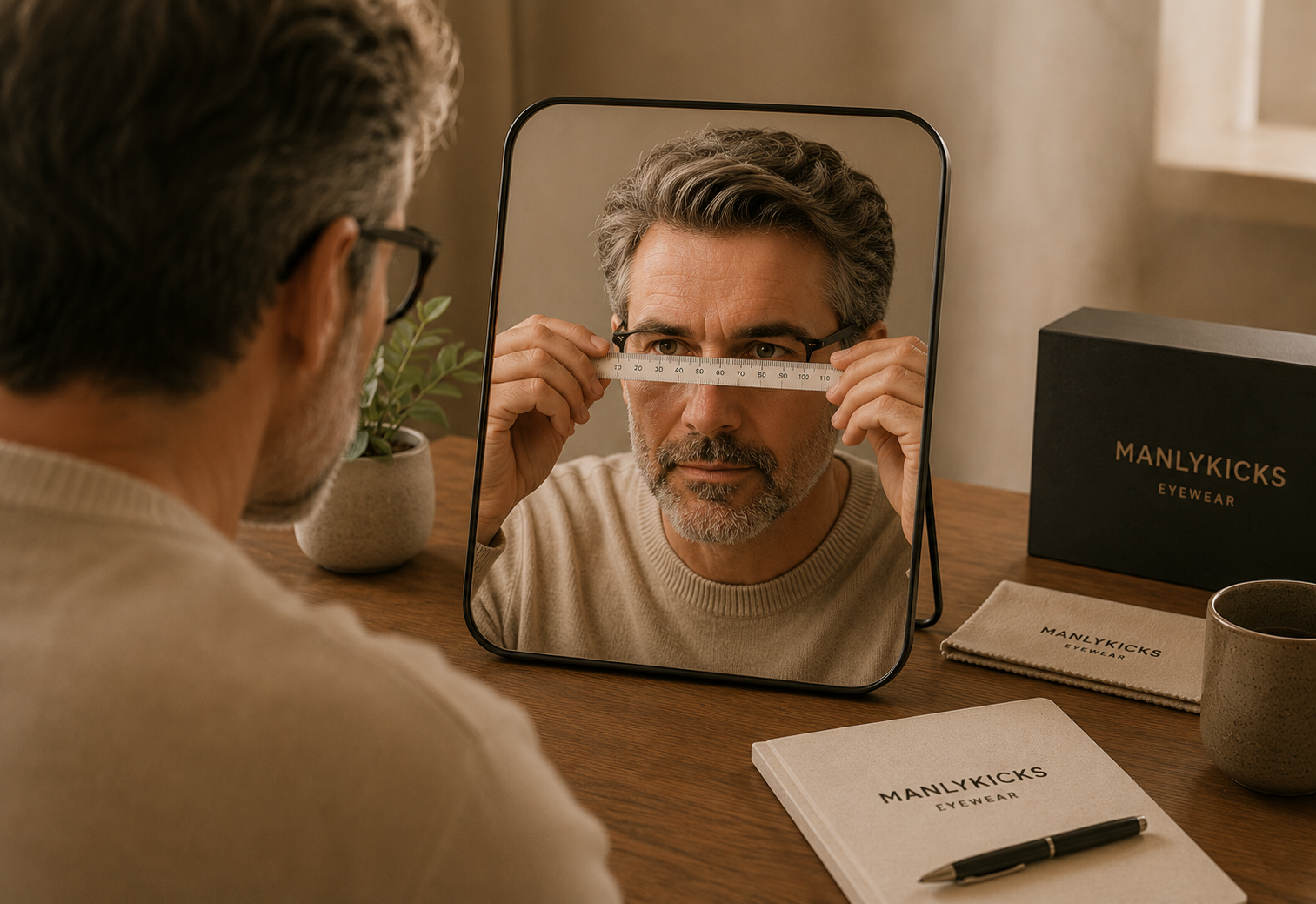
What Is Pupillary Distance?
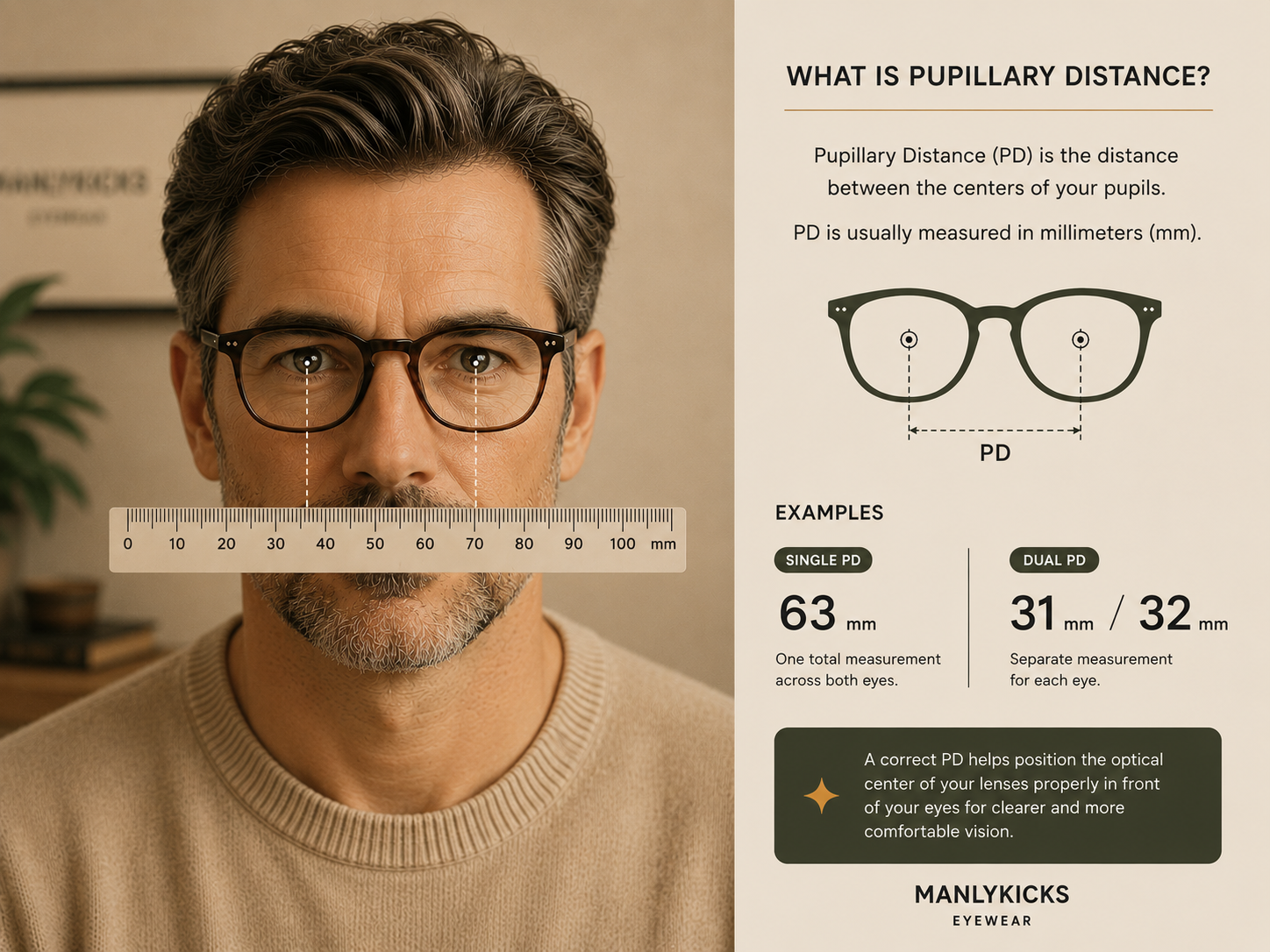
Pupillary Distance, or PD, is the distance between the centers of your pupils. It is usually measured in millimeters.
You may see PD written as a single number, such as 63 mm, or as two separate numbers, such as 31 / 32 mm.
Why PD Matters
Your lenses work best when the optical center lines up properly with your pupils.
Correct PD helps position the clearest part of the lens in front of your eyes.
Accurate alignment may help reduce visual discomfort during daily wear.
PD helps center your lenses correctly within your chosen frame.
For progressive lenses or stronger prescriptions, accurate PD becomes even more important.
Single PD vs. Dual PD
One Total Measurement
Single PD is one total measurement across both eyes.
Example: 63 mm
Separate Eye Measurements
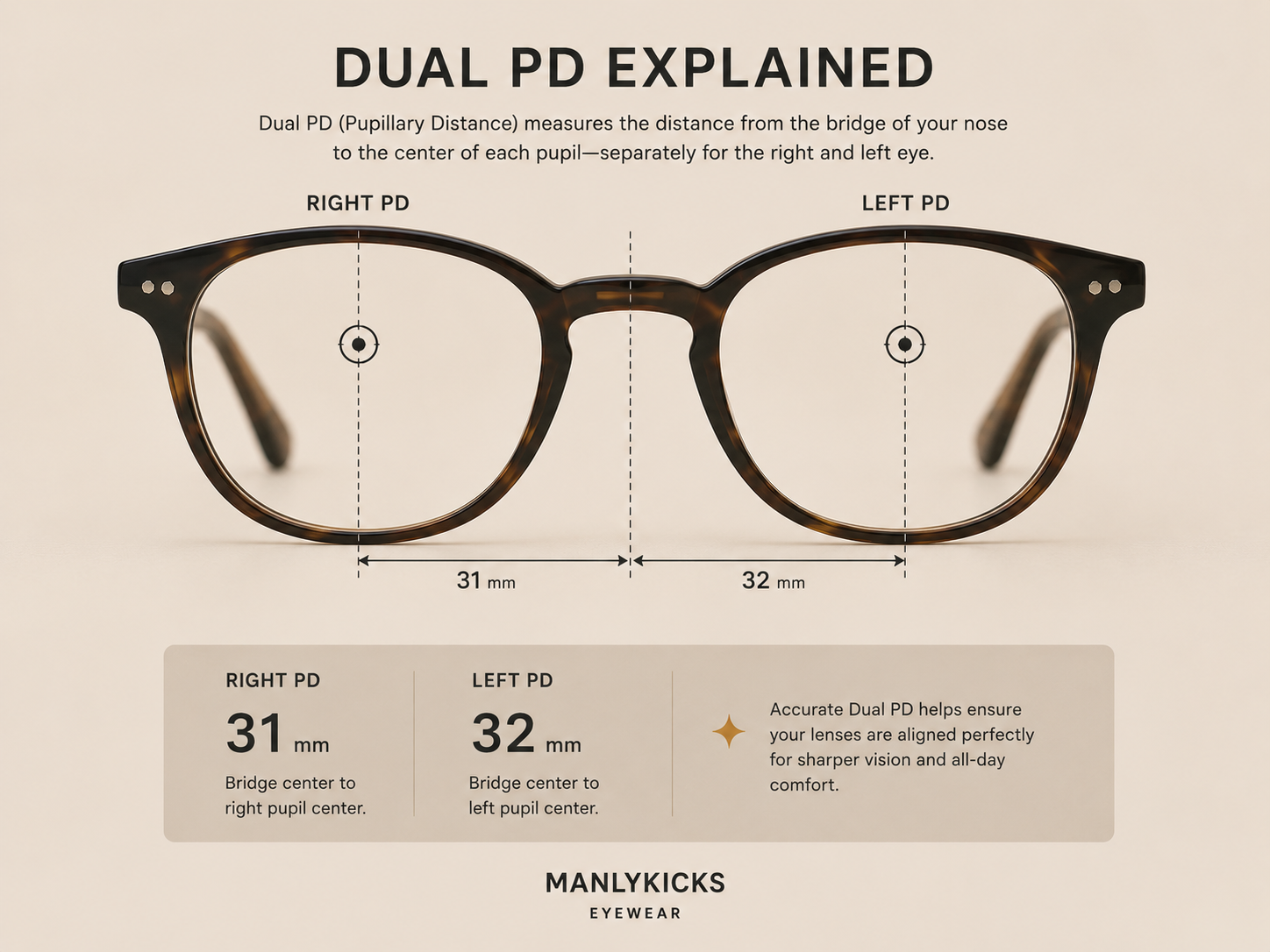
Dual PD separates the measurement for each eye.
Example: Right Eye 31 mm / Left Eye 32 mm
What You Need
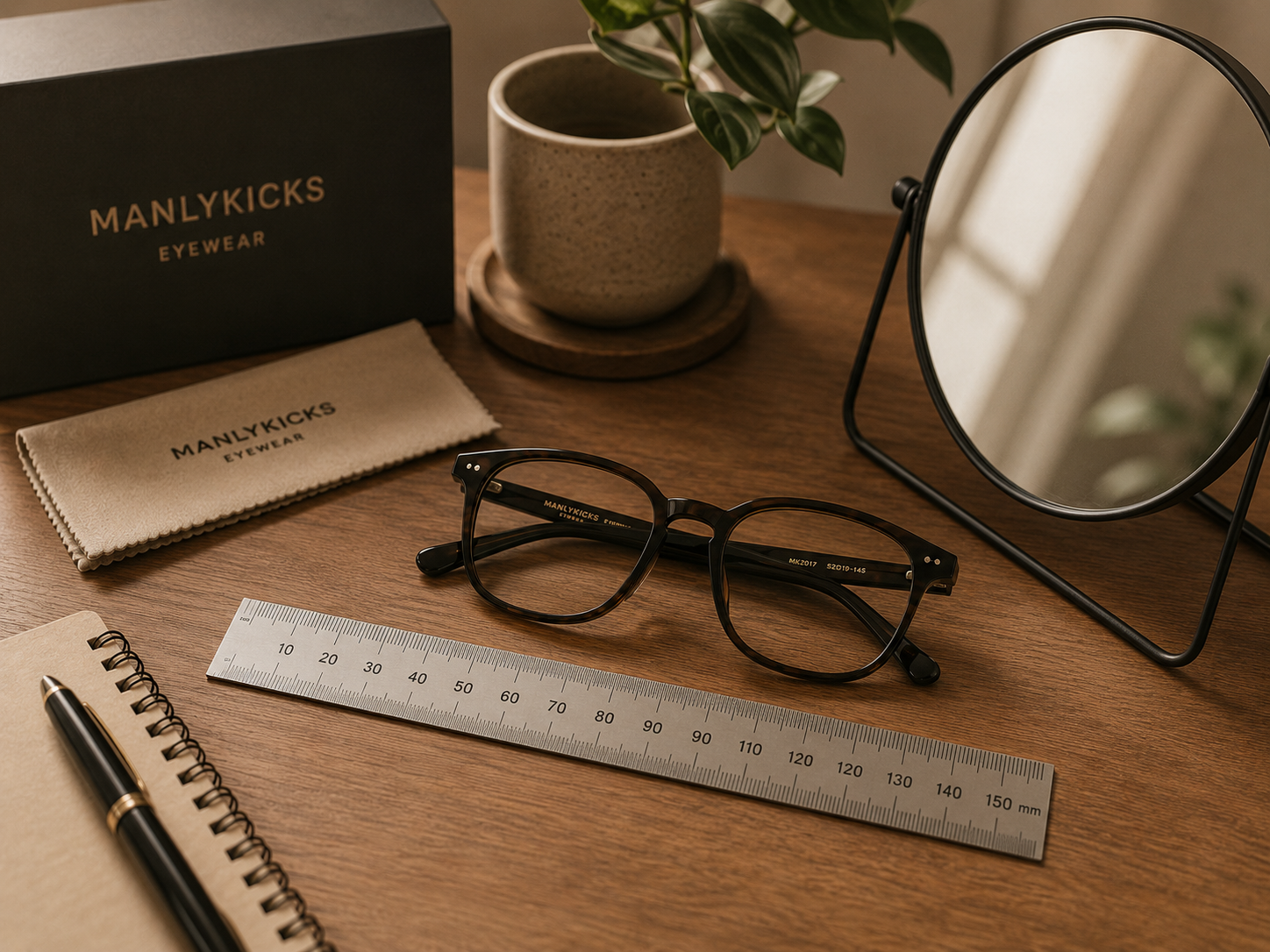
To measure your PD at home, you only need a few simple items.
Use a ruler with clear millimeter markings.
A mirror helps you align and read the measurement.
Clear lighting helps identify the center of your pupils.
Asking someone to help may improve measurement accuracy.
How to Measure PD by Yourself
Follow these steps to measure your PD at home using a ruler and mirror.
Stand in Front of a Mirror
Stand about 8 inches / 20 cm away from a mirror. Keep your head straight and look directly forward.
Hold the Ruler Level
Place the millimeter ruler across your brow line or directly below your eyes.
Align the Zero Mark
Close your right eye and align the “0 mm” mark with the center of your left pupil.
Read the Measurement
Open your right eye, close your left eye, and read the number lined up with the center of your right pupil.
Repeat 2–3 Times
Measure several times and use the average result for better accuracy.
How to Measure Dual PD
Dual PD measures each eye separately. This can help improve lens alignment for progressive lenses, stronger prescriptions, and customized lenses.
Measure Right PD
Align the ruler center with the bridge of your nose. Measure from the bridge center to the center of your right pupil.
Measure Left PD
Repeat for the left eye. Example: Right PD 31 mm / Left PD 32 mm. Total PD: 63 mm.
Tips for Better Accuracy
Tilting the ruler may affect the measurement.
Do not look at the ruler directly while measuring. Focus on your reflection or a distant point instead.
Repeat the measurement several times and use the average result.
Clear lighting helps identify the center of your pupils more accurately.
Using a Printable PD Ruler
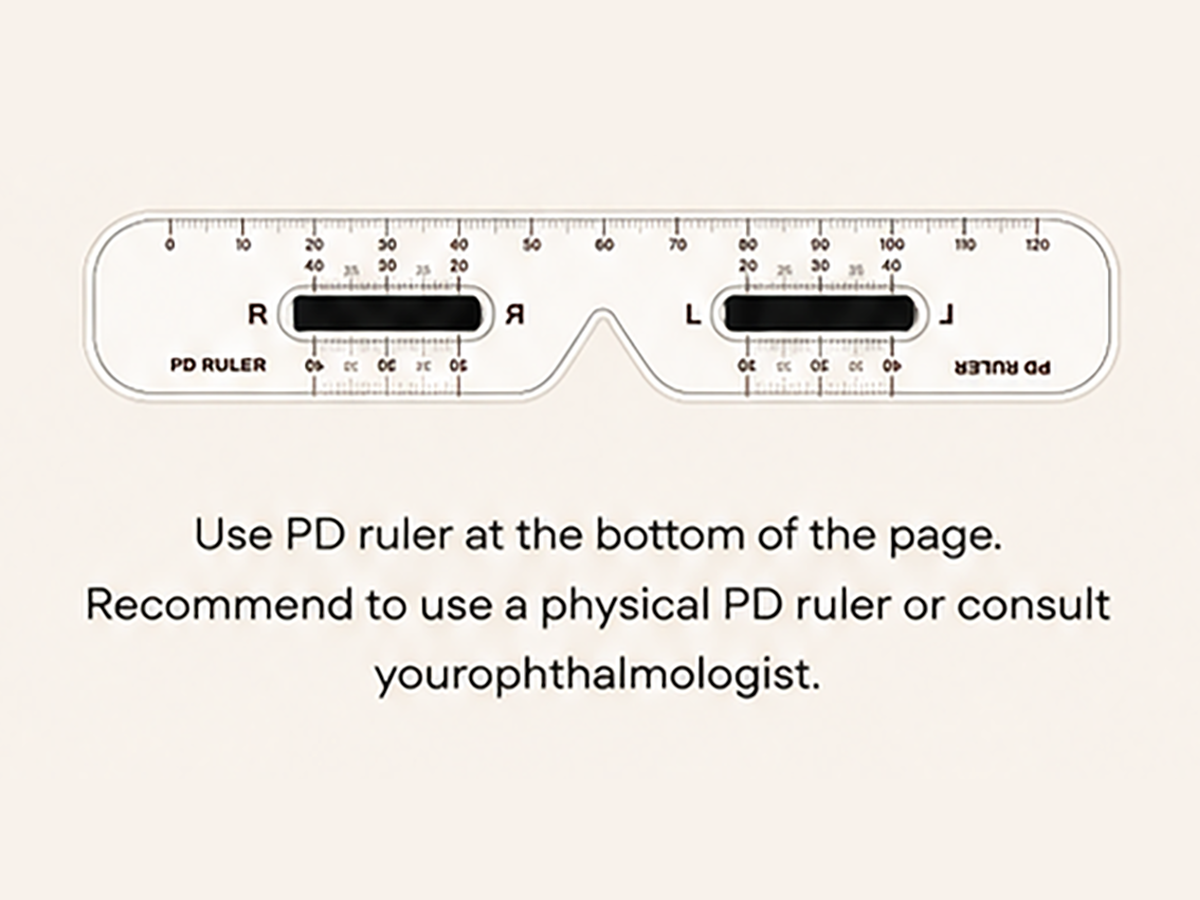
Some people prefer using a printable PD ruler. If printing a PD ruler, make sure it is printed at the correct scale.
Common Adult PD Ranges
Adult PD measurements commonly range between 54 mm and 74 mm.
However, every face is different, and your actual PD should always be based on your own measurement.
What If You Are Not Sure?
If you are unsure about your PD, measure again, ask someone to help, contact customer support, or visit an optical shop.
For progressive lenses or stronger prescriptions, professional measurements may provide the best result.
FAQ
Is PD required for prescription glasses?
Yes. PD helps align the lenses correctly with your eyes.
Can I order glasses without PD?
Some glasses can technically be ordered without PD, but accurate PD measurements are strongly recommended for comfort and visual clarity.
What is the difference between Single PD and Dual PD?
Single PD uses one total number. Dual PD separates measurements for each eye individually.
Is Dual PD better?
Dual PD may provide more precise lens positioning, especially for progressive lenses and stronger prescriptions.
Why does my vision feel uncomfortable with incorrect PD?
Incorrect PD may cause eye strain, blurry vision, or difficulty adapting to the lenses.
How accurate is self-measured PD?
Self-measurement can work well for many people, but measurements taken by another person or optical professional may be more accurate.
Can I use a phone app to measure PD?
Some apps may help estimate PD, but results can vary depending on lighting, camera angle, and positioning.
Clear Vision Starts With Accurate Measurements.
A correct PD measurement helps your lenses perform more naturally and comfortably throughout the day.
Not sure about your PD yet? Choose prescription lenses for customized vision correction, or explore our Age Fit Readers for simple everyday reading comfort.