
Progressive lenses offer seamless vision correction for distance, intermediate, and near ranges—all in a single lens. They look like single-vision lenses but pack much more function. However, not all eyeglass frames are compatible with these specialty lenses. Choosing the wrong frame can lead to narrow or misaligned viewing zones, which can affect activities like reading or driving.
This guide will walk you through which frames to avoid and what to look for when choosing frames for your progressive lenses—so you can enjoy clear, comfortable vision every day.
What Are Progressive Lenses?
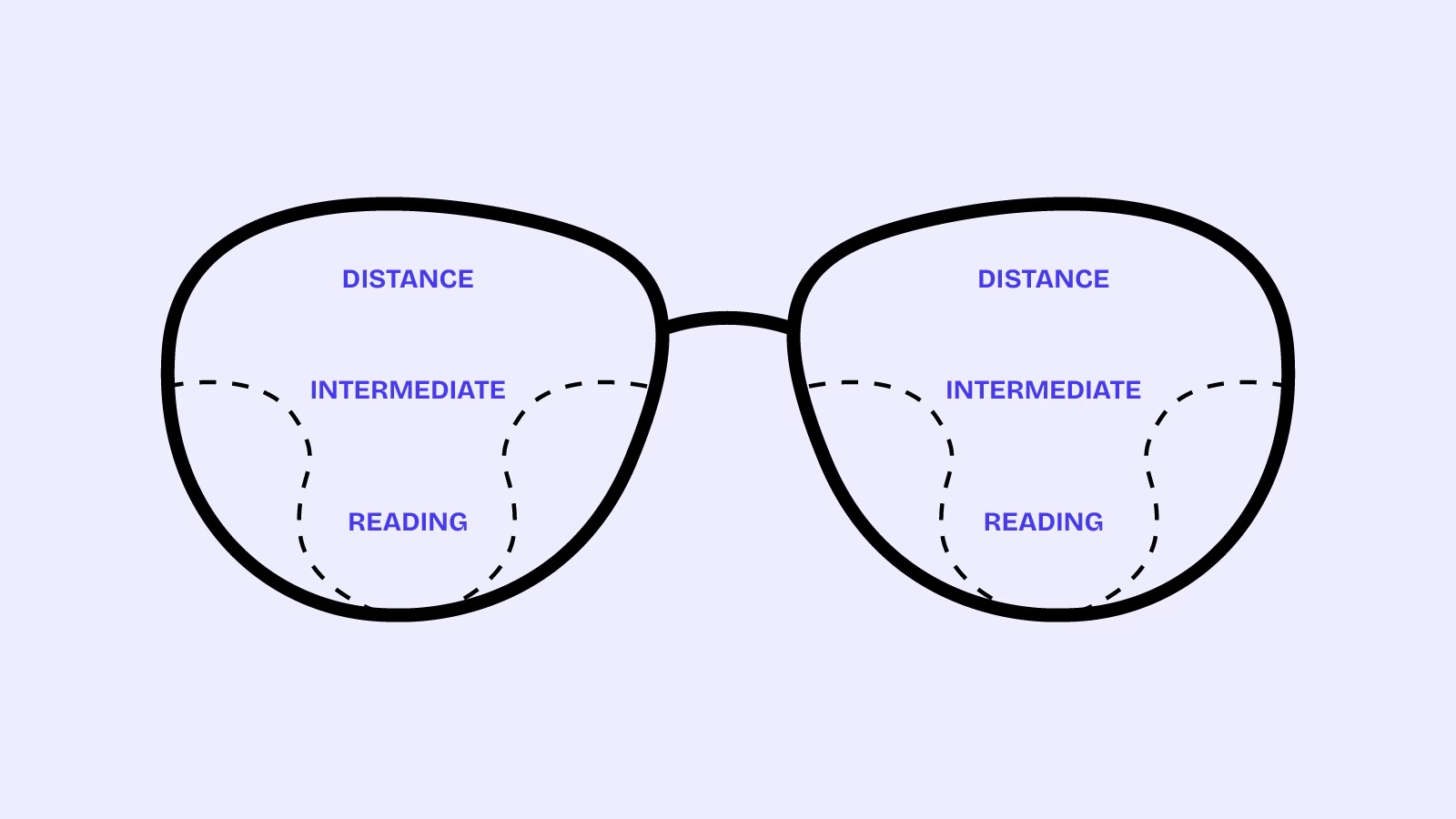
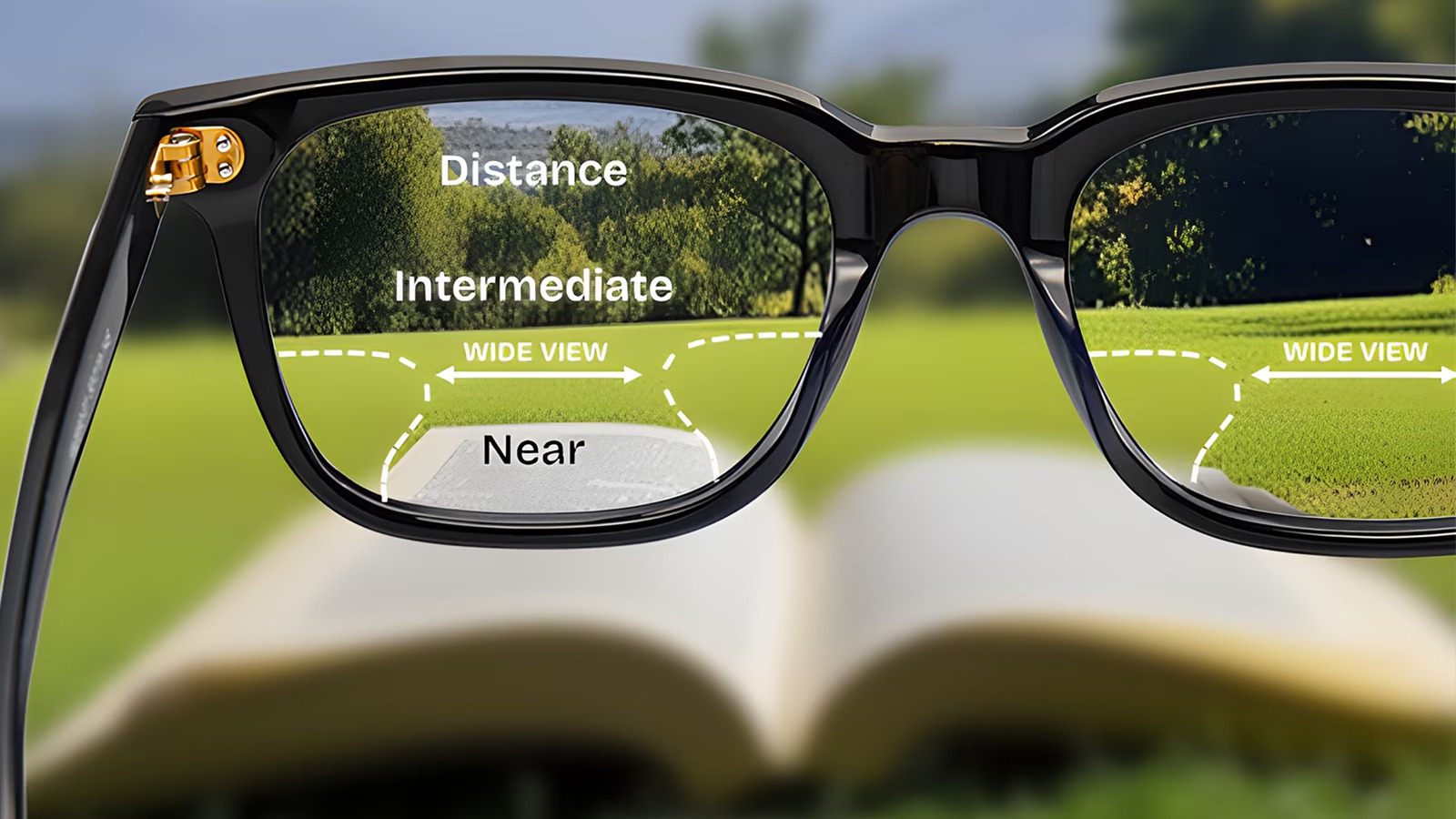
Progressive lenses are designed to help you see clearly at all distances. The upper portion of the lens helps with distance vision, the middle is for intermediate tasks like computer work, and the bottom is for close-up activities like reading. Unlike bifocals or trifocals, they have no visible lines—giving you a smooth, modern look.
To function properly, progressive lenses need enough vertical space to include all three viewing zones. Small or overly tight frames can compress these zones, leading to visual distortion or requiring you to tilt your head uncomfortably.
Frame Styles to Avoid with Progressive Lenses
Not every frame supports the design and function of progressive lenses. Some may look trendy but lack the dimensions or stability needed. Here are the most common styles to steer clear of:
1. Short Frames (Lens height under 28mm)
Progressive lenses need adequate vertical height to house the different viewing areas. Frames under 28mm in height often compress those zones, making vision feel cramped or blurry—like looking through a peephole.
2. Narrow Frames
Frames with a narrow width (under 50mm) restrict your peripheral vision. This can make it harder to see clearly at intermediate and distance zones without turning your head excessively.
3. Highly Curved or Wraparound Frames
Wraparound styles may distort the lens layout, pushing the viewing zones to the sides and warping peripheral vision. These frames are better suited for sports glasses, not everyday progressive lenses.
4. Low or Shallow Bridges
A poorly placed bridge can misalign the lenses with your eyes. If the nose bridge sits too low or at the wrong angle, the optical zones won't match your eye position, leading to discomfort and visual strain.
5. Rimless or Semi-Rimless Frames with Thin Edges
Minimalist designs may look sleek but lack the structural support needed for progressive lenses—especially if you have a stronger prescription. Thinner edges can also degrade visual clarity.
6. Unusual or Irregular Frame Shapes
Odd-shaped frames, such as tiny circles or angular geometric designs, often don’t provide enough vertical space for progressive zones. You might constantly shift your gaze to find the right focus.
7. Incorrect Pupillary Distance (PD) Alignment
If the frame doesn’t align with your pupillary distance, the optical center of the lens won’t match your eye position—causing blurry vision, eye strain, or a narrow field of view.
Tips for Choosing the Right Frame for Progressive Lenses
A well-chosen frame ensures your progressive lenses perform at their best. It keeps your vision clear and your eyes comfortable. Here’s what to look for:

-
Lens height of at least 28mm: A lens height between 30–34mm offers the best comfort and visual clarity.
-
Lens width of 50–55mm: This provides better peripheral vision and reduces the need to move your head constantly.
-
Adjustable nose pads: These help position the lenses correctly in front of your eyes.
-
Full-rim frames: These offer stronger support and help stabilize the lenses, which is essential for progressive wearers.
-
Professional fitting: Consult with an optician to measure your pupillary distance (PD) and ensure the frame sits correctly on your face.
Common Mistakes to Avoid
It’s tempting to choose frames based solely on style—but function matters. Trendy styles like micro-round or oversized geometric frames may look great, but they can compromise your field of view or lens performance.
Always test the frame before committing, and work with an eye care expert to ensure compatibility.
Conclusion
Frames that are too small, narrow, or oddly shaped can reduce the effectiveness of progressive lenses. They may shrink or misalign your vision zones, leading to discomfort and distortion.
For the best clarity and comfort, choose frames with enough height and width, proper support, and customizable features. Don’t forget to consult your optician for proper fitting and measurements.
Explore MANLYKICKS’ range of progressive-friendly frames—stylish designs crafted for modern vision and all-day comfort.